‘In a world that grows darker and more violent toward trans people each day, I find myself more and more reliant on nature. We can see ourselves more clearly there. There is transness in water, weeds, fruit, trees and rocks…Nature is enormous. Nature welcomes change, welcomes transformation. Nature loves sex. Nature doesn’t need to know who you were yesterday, or who you will be tomorrow. Nature understands that the survival and liberation of one must mean the survival and liberation of all. If we have not learned this lesson yet, we need to. Quickly.’
Terakes, Eros: Queer myths for lovers, p. xii-xiv
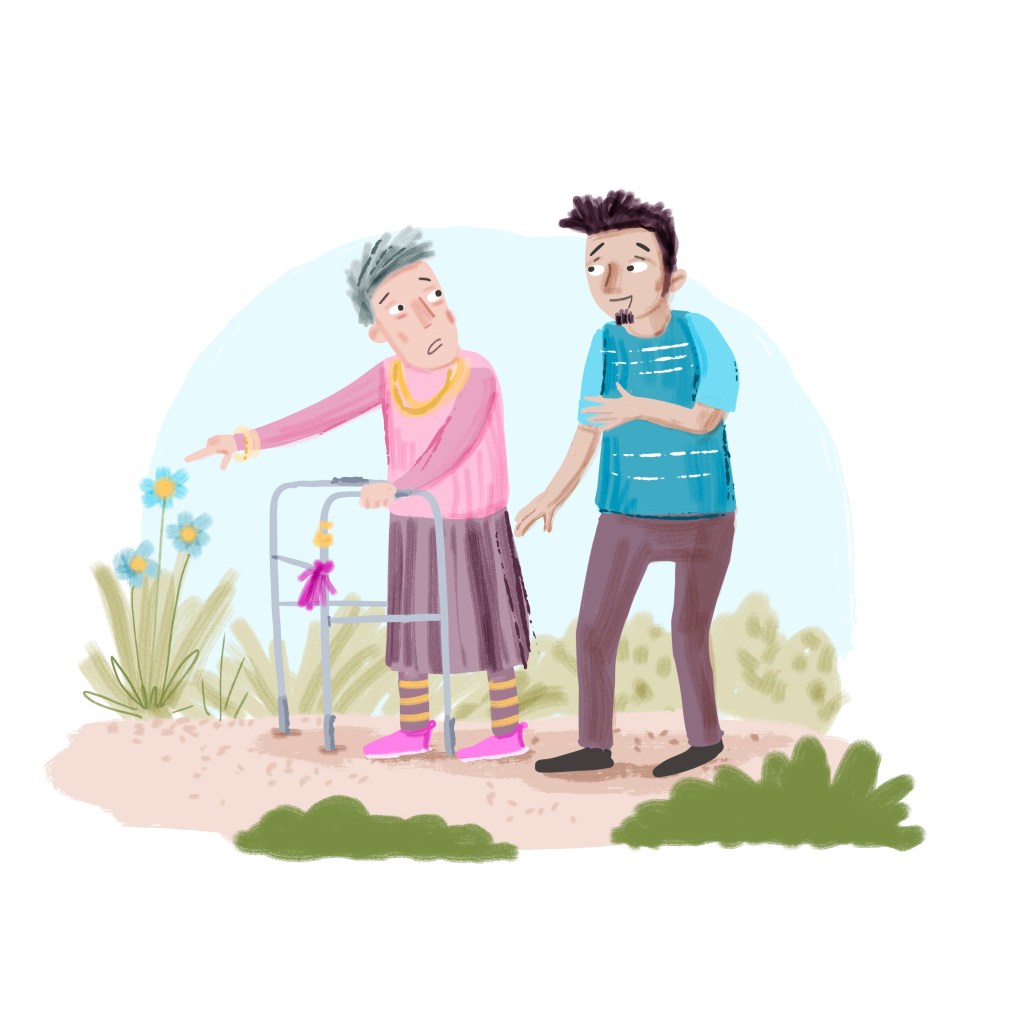
As a trans non-binary person, Terakes’ finds in nature the expansive enormity and constancy that meets them as they are and reflects them back in ways that are recognisable. In our work with LGBTQ+ people living with dementia, nature provides a similar sense of dynamic connectedness, an interaction without social, relational or cognitive demands.
Pam, a lesbian living with dementia, explained that she had been very reluctant to leave her wife for a few weeks respite in residential aged care. But when she arrived at the residential aged care facility, she found immediate solace looking at the birds through the window: ‘I felt safe,’ she said. She was surprised that she could spend six hours a day watching the birds. During our conversation, she acted out some of their behaviours, finding them funny, silly and curious.
Looking out of the window at the birds also seemed somewhat strategic. Pam described other people in the residential aged care facility as distressed and distressing, but emphasised that this didn’t worry her because she put her back to them and looked out at the birds instead. She did this bird watching with two other residents whose companionship became friendship for her. She was open to going back to the residential aged care facility again. She said, next time she’d take a big bag of bird seed. She knew that her friends would likely not be there anymore, but that the birds would.
At another time, Pam described how boring it was talking to lots of the older women in the day program that she attended. She said that all they wanted to talk about was their husbands and their kids, and they were aghast that she had a wife. She would often take herself away from these conversations and find a quiet place on her own.
For Pam connecting with nature, even just by observing birds through a window, allowed her to navigate her experience of dementia and herself in new ways. Observing nature gave Pam a meaningful thing to do which anchored her to a new place and new people. In this way the presence of the birds provided a sense of continuity and cohesion for Pam, she knew the birds would be there all day for her to return to. Even when other people died, left or were distressed, the birds remained. Having an anchor like this which was both dependable and novel (birds don’t really stay still and have whole worlds of their own) also provided a shared resource for Pam and her friends to connect with. They didn’t need to talk or remember or even know one another’s names, they just needed to be there looking out at the same thing. And most importantly, the birds through the window didn’t make any demands of Pam to talk, be who she used to be or be someone she’s not (heterosexual with kids).
My colleagues Lee Rushton, Lyn Phillipson and I have recently written about how nature provides this same power and solace for a general population of people living with dementia. In our paper, we were particularly interested in how engaging with gardens enabled often unrecognised forms of agency and citizenship. As with Pam, participants in our home garden study found that gardens were spaces that held huge potential to be themselves and recognise themselves through their embodied, habitual and sensory engagement. Lee has recently published a summary what this means practically in the Australian Journal of Dementia Care. Please get in touch if you’d like any of our writing about dementia and gardens.
Reference
Terakes, Zoe. (2025). Eros: Queer Myths for Lovers. Hachette Australia.
 Dementia Rainbow
Leave a comment